

Electric vehicle Air Conditioning
Probably the most discussed result was the top distinction between the common range and optimum range, showing that some motorists were consistently getting to 60% even more range than the average. This difference is because of some factors; some that a driver can get a handle on (ie. cabin home heating), and some they can’t get a grip on (ie. extra aerodynamic losings due to denser atmosphere when cold).
Many visitors asked for united states to show the heater load throughout the temperature range. While we can’t isolate specific heating units, we can show you the total additional loads. Auxiliary lots feature:
Auxiliary load is one thing our loggers can determine the other we monitor closely. In both our Electric cars in summer and Electric cars in Cold Weather webinars (both tend to be free to view), we discovered that one of the most important factors when looking at how painful and sensitive an electric automobile will be to temperature swings is the motorists choice for heating and air conditioning. By measuring the common additional power made use of throughout each journey, and evaluating that with driver suggestions the impact of heater and A/C use becomes clear.
The webinars go into detail and show exactly how many drivers fit into one of three patterns with regards to heating and A/C usage. On this page, we’ve included summary plots for both the Volt and the Leaf below. Just like the range plots, we once again found some difference. We plotted the trips using highest and most affordable auxiliary energy lots to demonstrate the effect of motorist choice. As you care able to see, some motorists have actually much higher auxiliary lots than the others.
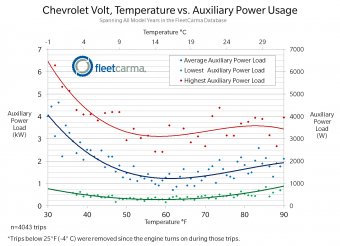
The Info shows the way the electric variety of these automobiles drops as conditions deviate from a cushty 60-75 °F (15-24°C). It’s no coincidence that nice area coincides aided by the temperatures we often put our thermostats to. Keeping a not-too-warm/not-too-cool temperature is definitely a comfort we now have cultivated you may anticipate while operating. Once we look at the typical motorist (in blue) we could see their particular auxiliary energy load bottoms in the same sweet spot.
As soon as we view information such as this, we see the same structure emerge time and time again, the bow-tie. The bow-tie reveals that with increased energy accustomed heat up and sweet the cabin, along with a drop in component efficiency, the readily available range takes a dive. This bow-tie could be impacted by facets like where the car is kept, and driver behavior details we describe within the summer Webinar.
We in addition viewed at how each automobile design makes use of auxiliary energy. That which we can see through the graph below is that as temperatures change, on average the Volt utilizes more additional energy. Just like our range contrast land, trips below 25 °F (-4 °C) aren't shown when it comes to Volt since the motor is intermittently turned on below that limit.
Tend to be Volt drivers heat-hungry men and women demanding a permanent condition of toastiness? Do LEAF motorists instinctively love being a bit too cold or small bit also hot? No.
Throughout the EV Champion Challenge we saw articles from both Volt and LEAF drivers alike showing their efforts to reduce the effect heating and air conditioning have to their energy usage. With motorists both in camps donning layers upon layers of insulating clothes, i do believe we could lump them together much more chill tolerant than the typical commuter. They were obviously the Champions though, and normal automobile owner (both of the plug-in and main-stream flavor) may move the heater knob.
Discover a technical difference between the Volt and Leaf with regards to their particular home heating methods. Both automobiles have actually a cabin heater and a factor (battery pack) heater, however the Volt has actually a slightly bigger cabin heater (5kW) and a significantly bigger electric battery heater (1800W in comparison to 300W). So there is a technical reason why we have been seeing steeper curves because of the Volt.
But here’s our huge concern to visitors: you think the reason the Volt auxiliary load is steeper is a) due to the fact heating units are larger (technical), or b) because Volt drivers are more likely to use even more cabin heat since it just means the motor will kick in sooner unlike the Leaf where there wasn’t a motor back-up (mental)?
Matt, the CEO of FleetCarma and a Volt owner, is guessing that psychology (b) could be the larger element.
Share this article
Related Posts



Latest Posts


