

What is Geothermal Heating and cooling?
 Geothermal temperature pumps (GHPs), often called GeoExchange, earth-coupled, ground-source, or water-source temperature pumps, have been around in use since the late 1940s. They use the continual temperature for the planet as trade method rather than the external air heat.
Although many places knowledge seasonal temperature extremes - from scorching temperature in the summertime to sub-zero cool in the winter—a few legs underneath the earth's surface the ground continues to be at a comparatively continual temperature. Depending on latitude, ground conditions range from 45°F (7°C) to 75°F (21°C). Like a cave, this ground temperature is warmer than the air above it during the winter and cooler as compared to atmosphere in the summertime. The GHP takes advantage of this by exchanging heat using planet through a ground heat exchanger.
As with every temperature pump, geothermal and water-source temperature pumps can heat, cool, and, if that's the case prepared, supply the house or apartment with hot-water. Some types of geothermal systems can be obtained with two-speed compressors and adjustable fans for more comfort and energy cost savings. In accordance with air-source heat pumps, they are less noisy, stay longer, need little upkeep, nor be determined by the heat associated with external environment.
A dual-source heat pump combines an air-source heat pump with a geothermal temperature pump. These devices incorporate the very best of both systems. Dual-source temperature pumps have higher effectiveness ratings than air-source units, but they are not quite as efficient as geothermal products. Is generally considerably dual-source methods would be that they are priced at a lot less to set up than one geothermal product, and work virtually besides.
Although the installation price of a geothermal system can be several times that an air-source system of the identical cooling and heating capability, the excess prices are gone back to you in power savings in 5 to ten years. System life is determined at 25 years for the inside components and 50+ many years for the ground loop. You can find roughly 50, 000 geothermal temperature pumps installed in america every year. To find out more, go to:
Kinds of Geothermal Temperature Pump Techniques
You will find four basic types of floor cycle systems. Three of the - horizontal, straight, and pond/lake - are closed-loop systems. The fourth types of system is the open-loop option. What type of these is most beneficial is dependent upon the climate, soil conditions, offered land, and regional installation costs within web site. A few of these approaches can be utilized for domestic and commercial building applications.
Closed-Loop Systems
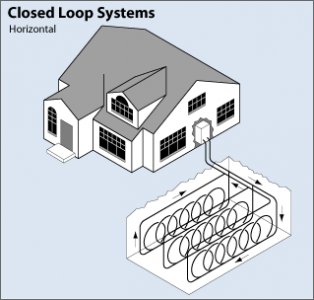
Most closed-loop geothermal temperature pumps circulate an antifreeze answer through a closed loop - generally made from synthetic tubing - that is buried in the ground or submerged in liquid. A heat exchanger transfers temperature involving the refrigerant in the temperature pump in addition to antifreeze solution when you look at the closed loop. The cycle is in a horizontal, straight, or pond/lake configuration.
Share this article
Related Posts


Latest Posts


